Series spotlight
Vendor Accountability
What the platforms your organization depends on are actually doing with your data and your fees.
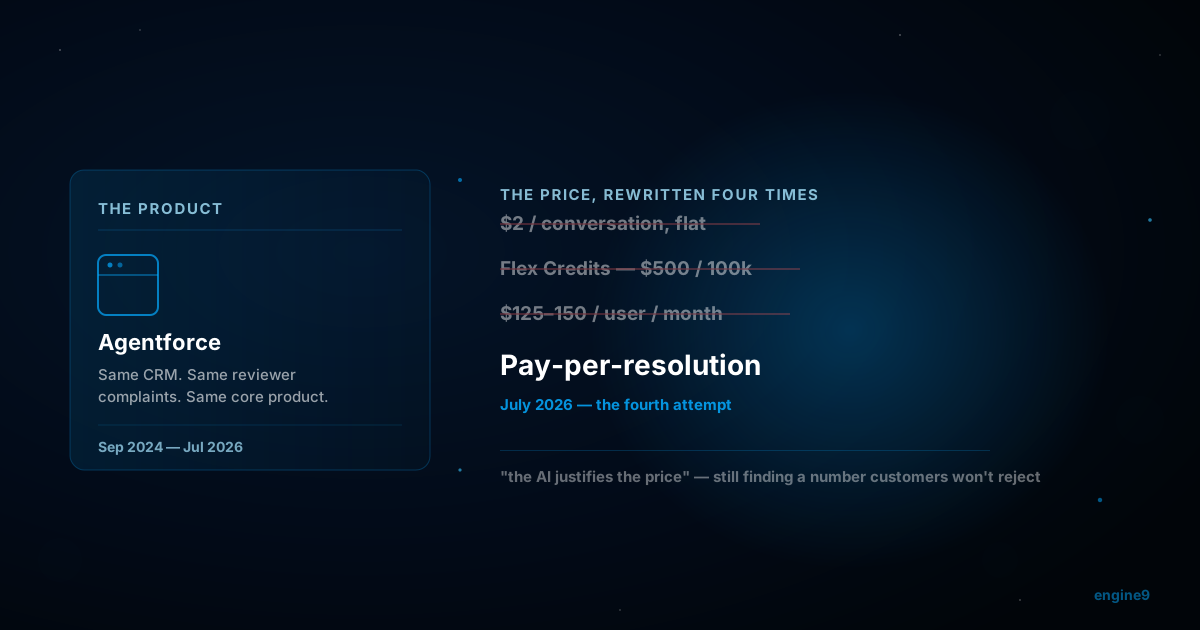
Salesforce has re-metered its Agentforce AI agent four times in under two years, while the underlying CRM stays the same. Zendesk and Blackbaud show the same pattern on a smaller scale.
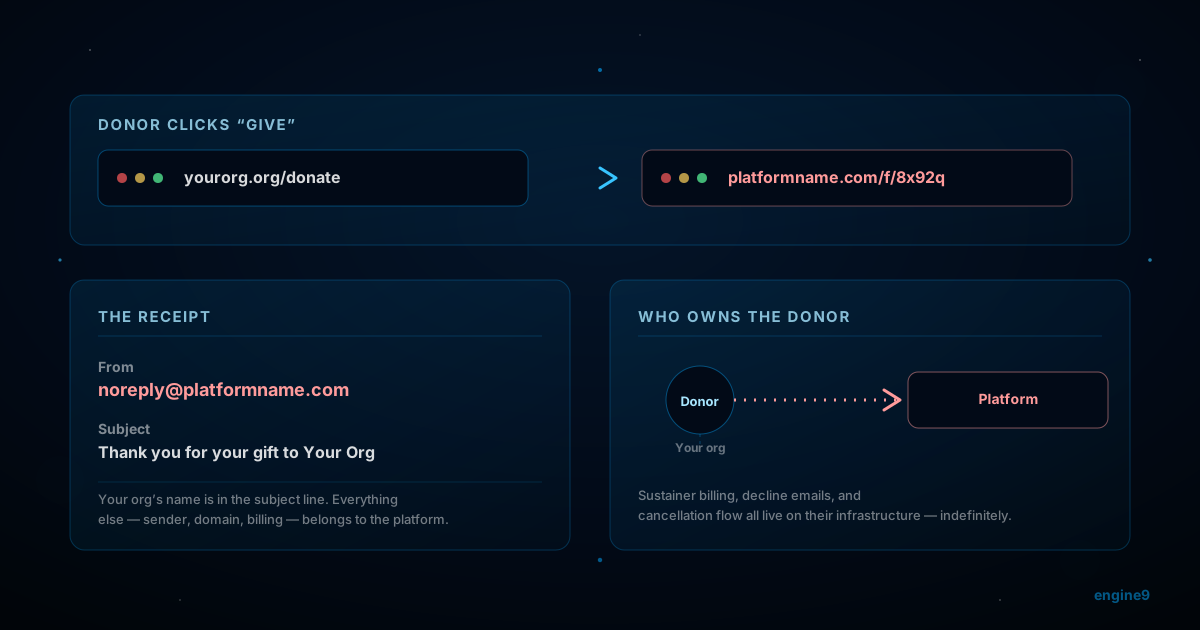
Most donation platforms redirect the checkout off your domain, handing the moment of trust — and often the ongoing donor or sustainer relationship — to their own brand instead of yours.
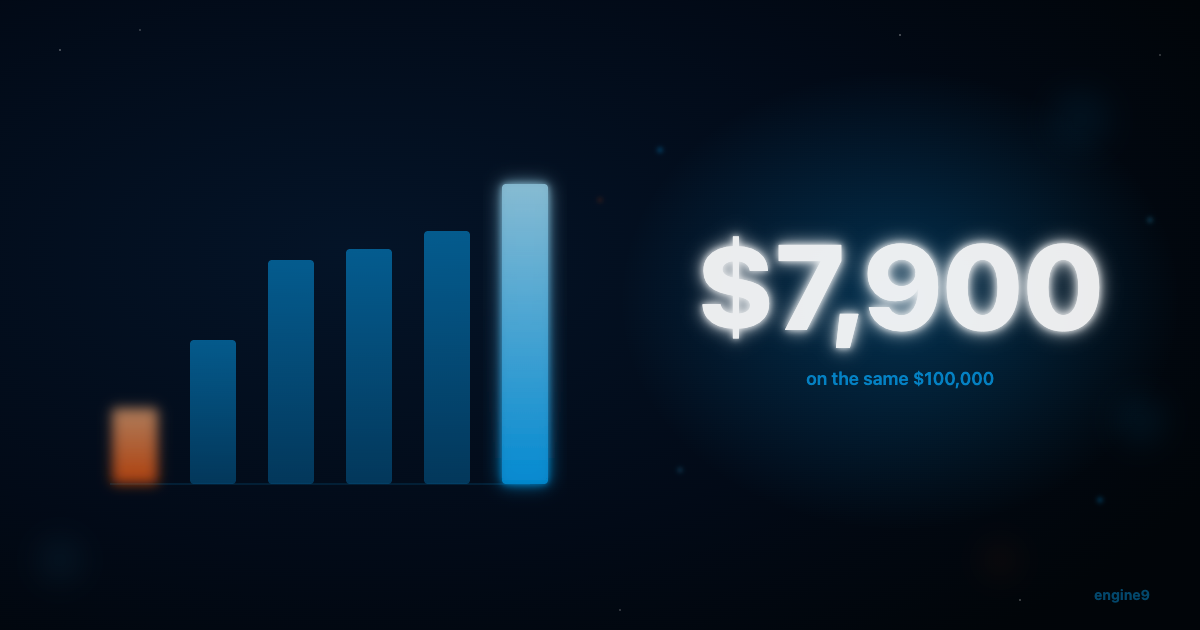
Donorbox, Givebutter, Fundraise Up, and Kindest stacked against the Stripe/PayPal nonprofit floor -- all-in totals, a $100k-giving dollar comparison, why the cost basis behind the markup has measurably dropped without savings passed through, and why most of these platforms pull donors off the nonprofit's own domain at the moment of giving. Sixth piece in the Vendor Accountability series.
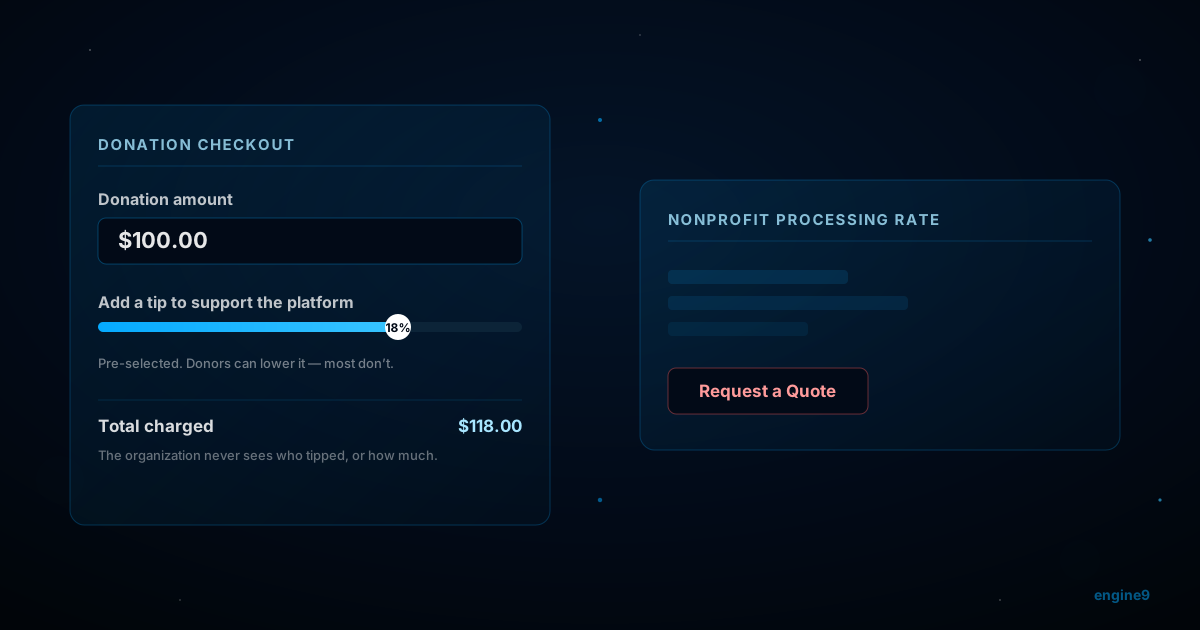
GoFundMe's checkout tip is opt-out, not opt-in -- a percentage pre-selected by default, invisible to the org running the fundraiser. GoFundMe Pro, built for nonprofits, still won't quote your actual processing rate. We looked at both.
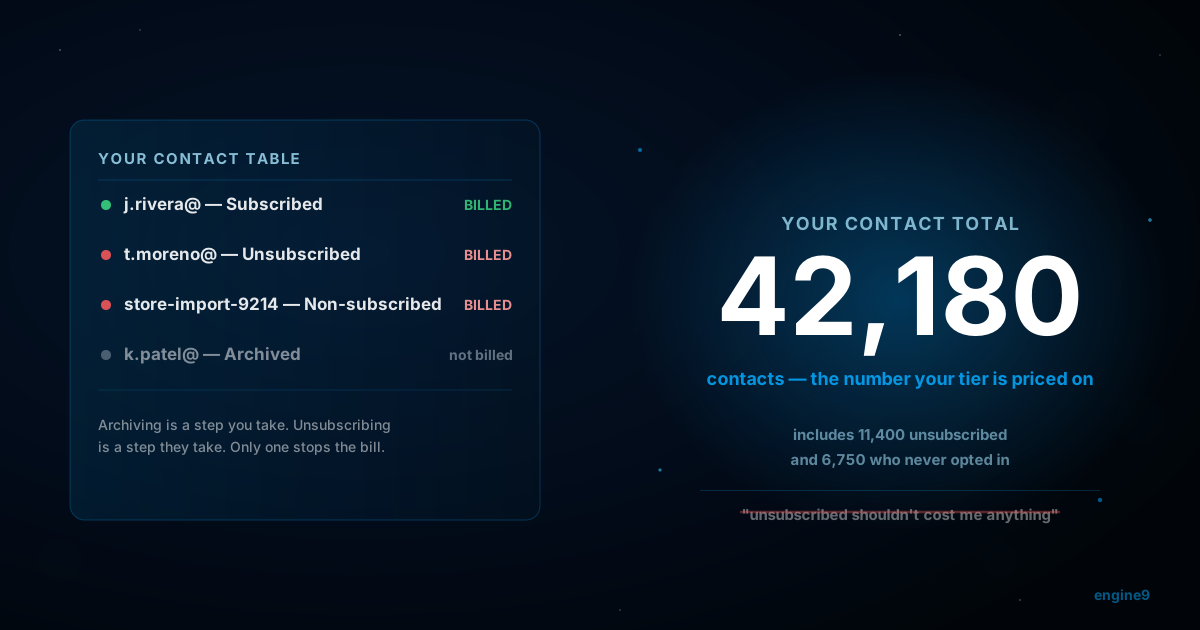
Mailchimp's own help docs are plain about it: unsubscribed and never-opted-in contacts still count toward your paid tier. The only way off your bill is archiving them yourself -- a separate, non-obvious step that isn't mentioned on the pricing page.
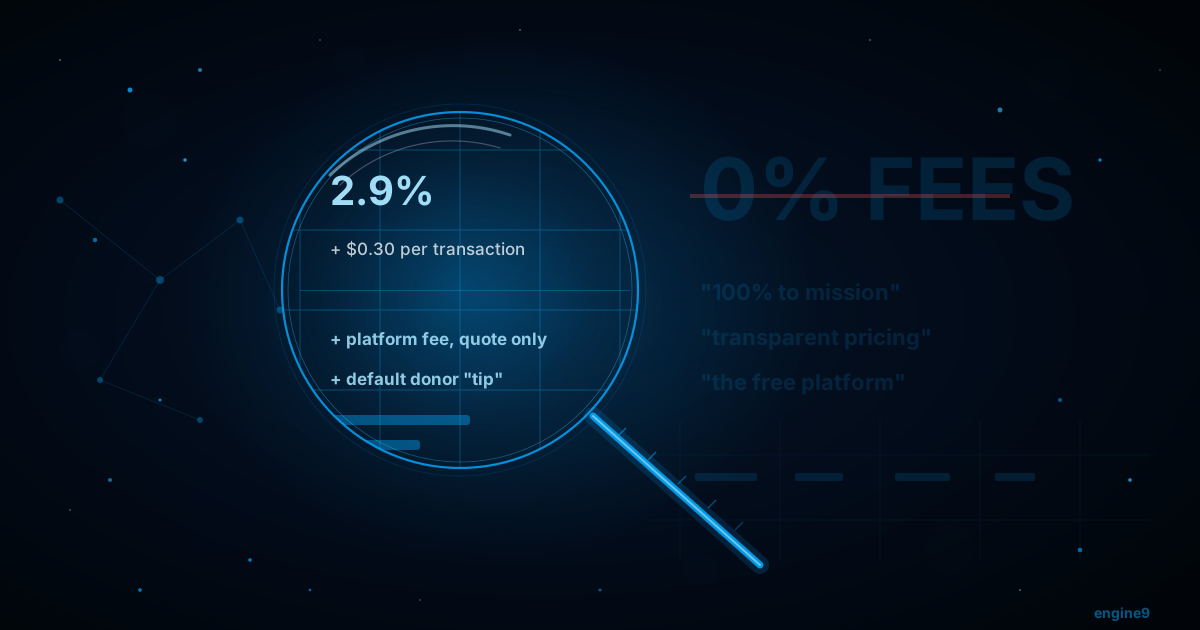
Meta advertised 0% fees on Facebook donations for years, then quietly shifted processing to PayPal Giving Fund. GoFundMe Pro (formerly Classy) won't publish a nonprofit processing rate at all. Network for Good stopped publishing pricing entirely. We stacked what each actually charges against the real cost of moving money.
Blackbaud's own regulators — the SEC, the FTC, and 49 state attorneys general — found that what the company told nonprofits about its 2020 breach didn't match what it knew.
EveryAction defines "click rate" differently from every major email platform — and their own documentation proves it. Here's the math, the consequences, and why you probably haven't been able to verify any of it.
Your test suite is also vibing — and now your agent is running it. More automated coverage than ever, more false confidence than ever. Here's how agentic workflows change the testing paradox, what actually helps, and the one question you should ask before every merge.
Every shortcut in vibe-coded software is a tiny loan you'll repay on a schedule you don't get to pick. A meditation on technical debt, the lies we tell ourselves at 11pm, and how to actually keep the reckoning manageable.
Vibe coding works best when you treat the AI as a well-briefed collaborator, not a magic box that reads minds. The people who get remarkable results plan before they prompt — here's the five-minute brief that makes the difference.
Prompting can build a website in an afternoon — but a site is still a system with goals, an audience, and a structure. Here are the key areas to focus on so the speed works for you: defining goals, mapping architecture, a consistent design system, building component by component, real content, accessibility, and testing before you ship.
The series wrap-up: how SMS fits into the full supporter journey — from first text to lasting relationship. When every message connects back to donations, history, and segments, teams can close the loop and turn one-off engagement into momentum.
A data warehouse is not the point — what your team can do with connected data is. Here are the practical things nonprofits can accomplish when SMS engagement connects to donations, donor records, campaign history, and segments.
Vibe coding lets small teams build big things fast — but "it runs" isn't "it's done." The number one rule: ask your tools for real security, or you'll ship your supporters' data straight to the internet. Here's how to stay fast and responsible.
The value of SMS attribution isn't just knowing whether a message worked — it's knowing what to do next. When attribution becomes a learning tool, teams can sharpen targeting, improve follow-up, and understand supporters more clearly.
A text message is one of the fastest ways to reach a supporter — but it only tells part of the story. When SMS connects to donations, donor records, campaign history, and segments, teams can finally see what happened after the text and what to do next.
For twenty years, the tech industry sold organizations the same story: more features, more modules, more dashboards. The result? Ballooning budgets and scattered data. It's time for a different approach.
AI-powered, prompt-built websites are replacing months of custom development and cookie-cutter templates. Combined with a lean data layer, organizations can rebuild their front end in hours — not months.
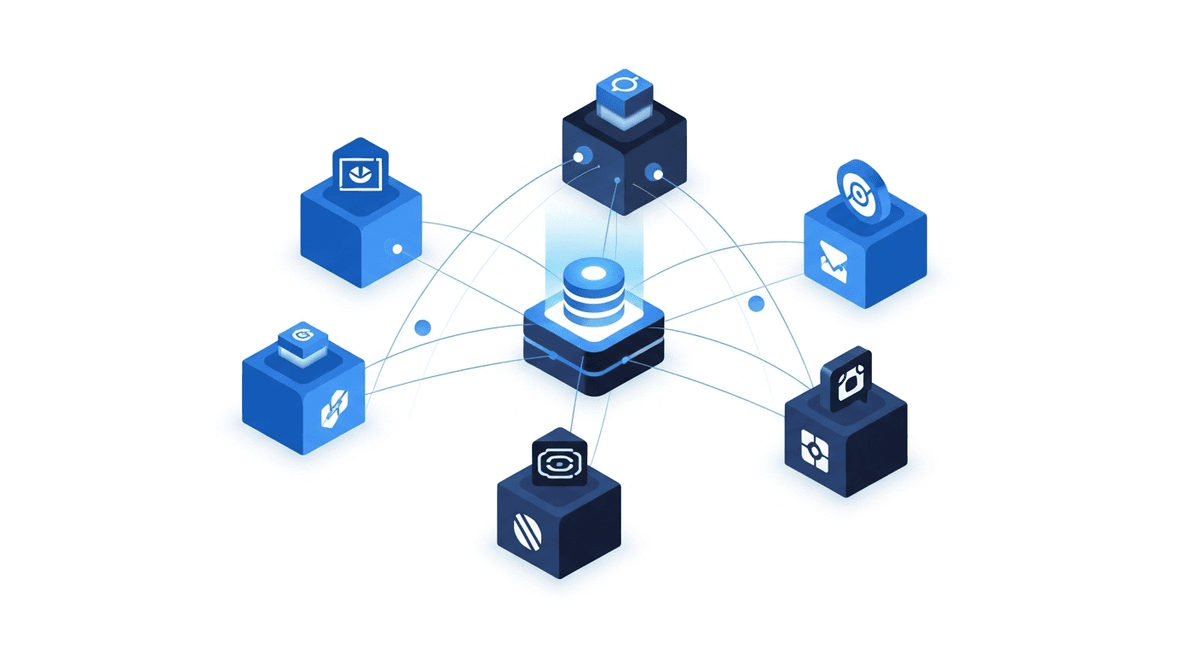
Instead of trying to be everything, engine9 is your data repository — and lets specialized plugins handle the rest. Here's what replacing your CRM actually looks like and the questions to ask about your tech stack.
Think your CRM gives you the full picture of your supporters? This article uses a fun RPG metaphor to explain why you might be missing a whole universe of valuable data, and how a Customer Data Platform (CDP) can unlock deeper insights for better engagement.
AI-powered video creation is the new frontier, but who's leading the charge and who's just faking it? A recent article dives deep into the capabilities of four major players: InVideo AI, Google's Gemini, Freepik AI, and Canva.
List building? Yeah, we're talking about it. Still. Like pineapple on pizza, acquisition stirs things up. But let's be real, ignoring it in 2025 is digital suicide for any serious fundraising operation.
In our experience, there's always one thing that separates ugly from good, and good from great: solid source coding.